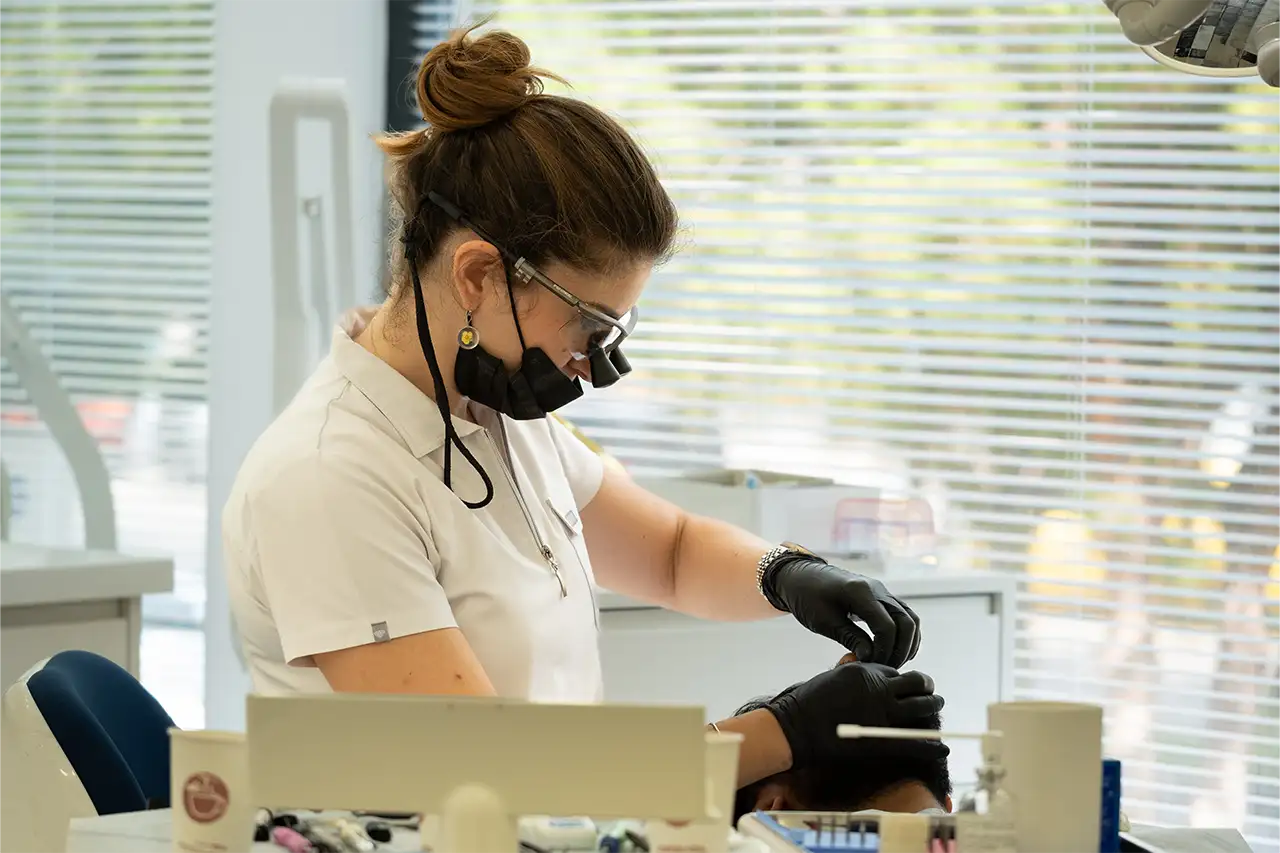
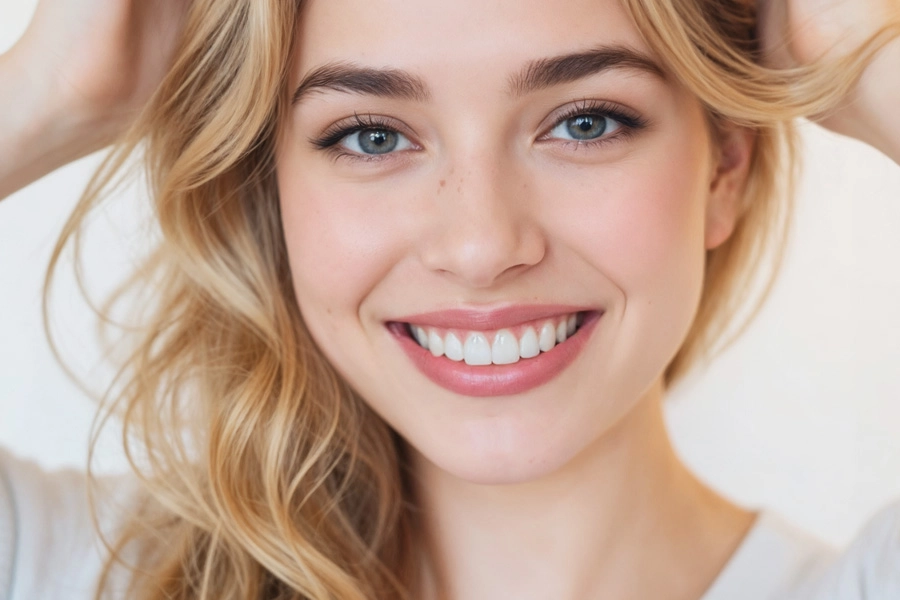
The Hollywood Smile (Smile Makeover) is a custom cosmetic operation that gets its name from the bright grins of movie stars. Its goal is to make teeth that are white, even, and perfect. This idea is to come up with the most attractive grin that makes the person feel good and fits perfectly with their facial characteristics, lip structure, and gum appearance.
8 Sections
Digital smile design is like a map that shows you what your new smile will look like in a digital setting before you start treatment. The steps are as follows: • Recording the shape of the mouth and teeth digitally: First, your dentist uses a special camera that goes into your mouth to take pictures of your teeth and mouth anatomy. This way of measuring is much more pleasant than the old way. This scan records not only your teeth but also your gums and the shape of your face.
- Design in a computer environment: The computer gets all the data from the camera. Your dentist starts to draw the best tooth shape for your face, lips, and personality on the computer with the skill of an artist. Each tooth's color, size, and placement are changed to properly complement your face.
- Simulation: A unique program turns this computer design into a 3D animation. This shows you what your smile will look like in 3D at the end of treatment, even when no work is done on your teeth.
- Personal approval and revision: The finest aspect of this stage is that you may take part in the process. You can edit any parts of the design that you don't like or want to change right away with your dentist. This makes sure that your expectations are completely met and that you won't have to deal with any surprises.
If you are wondering, ‘Will a smile be designed specifically for me, but what exactly does this design entail?’, you are in the right place. When you come to Isın Dental Clinic for a Smile Makeover (Hollywood Smile), the process you will undergo is as follows:
Preparatory procedures
Detailed examination and diagnosis
- Panoramic X-ray: An overall image of all your teeth, jawbones, and sinuses is taken.
- 3D Tomography (CBCT): Taken if necessary for implant planning or jawbone analysis.
- Intraoral photographs: Photographs of your teeth are taken from every angle.
- Digital scanning: Instead of traditional impression materials, a 3D model of your teeth is created using an intraoral scanner.
Professional dental calculus removal (Detertraj)
Dental calculus, which causes gum inflammation, is removed. No aesthetic procedures are performed without this treatment.
Treatment of tooth decay
- Fillings are placed on decayed teeth, if present.
- Root canal treatment is performed on advanced decay.
Treatment of gum disease (Periodontal treatment)
If there is gum bleeding, swelling, or redness, gum treatment is performed first.
If necessary, curettage (deep cleaning of gum pockets) is performed.
Supportive procedures
At this stage, interventions are performed to prepare the ground for aesthetic procedures.
Gum adjustments
Gingivectomy (Gum Resection):
- If your gums are highly visible when smiling (gummy smile),
- If your teeth appear short (teeth are actually normal but gums are excessive),
- If gum levels are asymmetrical,
- Excess gum tissue is removed using a laser or surgical blade. Recovery usually takes about 1 week.
Gingivoplasty (Gum reshaping):
The shape of the gums is corrected to achieve a more aesthetic appearance.
Frenectomy (Tongue-tie release):
If the upper lip tie is too long and causes a gap between the teeth, this tie is cut.
Orthodontic treatment (Braces or clear aligners)
Sometimes a smile makeover begins with braces. Especially:
- If there is severe crowding,
- If the teeth are significantly rotated,
- If there is a malocclusion,
First, orthodontic treatment is used to move the teeth into the correct position (6 months - 2 years), then aesthetic procedures are performed. Today, clear aligners (such as Invisalign) make this process more comfortable.
Implant applications
If there are missing teeth, they must be replaced first. Implant:
- Placement of a titanium screw into the jawbone,
- 2-6 months of waiting for osseointegration,
- Placement of a crown.
If there is insufficient bone in the area where the implant will be placed in the upper jaw, the sinus floor is raised, and bone graft material is added.
Root canal treatment
If there is decay or infection in teeth undergoing cosmetic procedures, root canal treatment is first performed to clean and disinfect the inside of the tooth.
Teeth whitening (Bleaching)
Sometimes we are only concerned about the color, and the shape of the teeth is fine. This procedure is applied to natural teeth, not to teeth that will undergo laminate veneers or crowns.
- In-office whitening: Results in 1 hour at the clinic using a high-concentration gel.
- At-home whitening: Results in 1-2 weeks using trays and gel provided by the dentist.
Main aesthetic procedures
Once all preparations are complete, the procedures that provide the actual aesthetic transformation begin.
Porcelain laminates (veneers)
These are very thin (0.3-0.5 mm) porcelain sheets that are bonded only to the front surface of the teeth. They are used especially on front teeth for color and shape corrections.
Application method:
- The front surface of the teeth is minimally abraded (sometimes not abraded at all—'no 'prep' veneer).
- An impression is taken, and temporary laminates are bonded.
- They are specially prepared in the laboratory from E-max porcelain (usually within 1 week).
- The temporary veneers are removed, and the permanent veneers are bonded with a special cement.
Zirconium Crowns (Full crown)
These are extremely durable, metal-free crowns that completely cover the tooth. Areas of use: Back teeth, bridges, those with teeth grinding problems, single tooth crowns. Application method:
- The teeth are ground down by approximately 1.5-2 mm on all sides.
- An impression is taken, and temporary crowns are fitted.
- The crowns are fabricated from a zirconium block using CAD/CAM technology.
- The temporary crowns are removed, and the zirconium crowns are cemented in place.
Composite laminates (Bonding)
This involves shaping the tooth-colored filling material by applying it directly to the tooth. Applications: Small fractures, single tooth gaps, emergency solutions, and those seeking budget-friendly options. Application method:
- The tooth surface is lightly roughened.
- Composite resin is applied layer by layer and cured with UV light.
- Teeth are shaped and polished.
- Completed in a single session
Emax veneers (Ceramic)
- A method between laminate and crown. Both durable and aesthetic.
- Requires slightly more abrasion than laminate veneers but less than zirconium.
- Can be used for a single tooth or as a bridge.
Other procedures used in smile design
Gum filling: In cases of receding gums, a gum appearance is created using pink-colored composite or porcelain.
Tooth contouring: Teeth that are too long or pointed are shaped by filing them down with a fine instrument.
Gap closure: Black triangles (gaps caused by gum recession) are filled with pink composite or porcelain.
Overdenture: Fixed prostheses placed on implants in cases of complete tooth loss.
Cases involving all procedures:
Only discolouration and minor shape irregularities
Example: Yellowed teeth, slight gaps, one broken tooth. Procedures performed:
- Dental scaling
- Porcelain veneers on 6 teeth (upper front)
- Composite veneers on 4 teeth (lower front)
Advanced aesthetic and functional impairment
Example: Missing teeth, receding gums, crowding, and discoloration. Procedures performed:
- Root canal treatments
- 2 implants
- Gum surgery (gingivectomy)
- 6-month clear aligner treatment
- 12 zirconia crowns
- DSD planning
Treatment timeline (Typical smile makeover process)
This timeline is an estimate. Complex cases involving implants, orthodontics, or advanced gum treatments may require additional time.
| Timeline | Procedure |
|---|---|
| Week 1 | An exam, X-rays (panoramic/3D), a DSD (Digital Smile Design) photo shoot, and a professional teeth cleaning (scaling) |
| Week 2 | Presenting the DSD design, getting it approved, and making a temporary mock-up (trial smile) |
| Weeks 3-4 | If necessary, put in implants, do root canals, or shape the gums (gingivectomy or gingivoplasty) |
| Week 5 | Tooth preparation (minimum enamel reduction), digital imprints, and putting in interim restorations |
| Week 6 | Try out the permanent repairs and make any changes or corrections that are needed |
| Week 7 | Final cementation (bonding) of permanent restorations and checks for occlusion |
treatment selection guide (Which procedure suits whom?)
| Condition / Goal | Recommended Procedure | Duration |
|---|---|---|
| Teeth whitening (just color change) | Bleaching | 1 hour – 2 weeks |
| Small chip, one tooth missing | Composite laminate bonding | 1 session |
| Multiple teeth: colour and shape problems | Porcelain laminate (E-max veneer) | 2–3 weeks |
| Bruxism / back teeth grinding | Zirconium Crown | 2–3 weeks |
| Missing teeth and cosmetic issues | Implant + Zirconium Crown | 4–8 months |
| Crooked teeth with poor appearance | Orthodontics and laminate | 1–2 years |
Like every cosmetic treatment, the Hollywood Smile has both pros and negatives that you should think about.
H-3 Advantages:
- Better looks: It was made just for you, so it gives you a natural and lovely grin that goes well with your face.
- More self-confidence: When you're happy with your grin, you may be more open in your personal and professional life, which boosts your self-confidence.
- All-in-one solution: A single treatment plan can fix a number of cosmetic issues, such as color, form, spacing, and small misalignment.
- Long-lasting: Porcelain and zirconium veneers, in particular, can last 10 to 15 years or even longer if you take proper care of your teeth and see the dentist regularly.
- Stain resistance: Natural tooth enamel is far more likely to stain than porcelain and zirconium materials.
Disadvantages
- Cost: Because it is a full therapy, it costs more than other cosmetic procedures.
- Irreversibility: This technique is usually irreversible since some of the tooth enamel is broken down to make the lamina or crown. You will have to use the veneers for the rest of your life after they are done.
- Sensitivity: You can feel sensitive to warmth and cold for a few weeks following the surgery.
- Maintenance needs: To make the veneers last longer, you need to take good care of your teeth. People who grind their teeth may also need to wear a sleep guard.
Smile design is a common cosmetic procedure, but it is not always the best choice. This application cannot be used on these patient groups:
- People who don't take care of their teeth well • People who have active gum disease
- People who grind their teeth (bruxism)
- People whose dental tissue quality isn't good enough
- People with medical disabilities (those with uncontrolled diabetes, people getting treatment for bone resorption, and people with weak immune systems)
- People who expect too much (those who ask for things that are entirely unnatural or make demands that don't fit with how the face works)
Smile Makeover (Hollywood Smile) cost comparison
The table below shows the projected price ranges for a full smile makeover, which usually includes 16 to 20 teeth and uses high-quality materials like porcelain (E-max) laminates or zirconium crowns. These are only average estimates, so the ultimate expenses may be different depending on how complicated the case is, how well-known the clinic is, and what materials are used.
| Country | Price per Tooth (€) | Full Smile Makeover (16-20 teeth) (€) | Things That Affect Cost |
|---|---|---|---|
| Turkey | €230 – €420 | €3,200 – €7,000 | Very competitive because of low overhead costs, a lot of patients, all-inclusive packages (hotel and transfer), and good exchange rates for patients from other countries |
| United Kingdom (UK) | €1,100 – €2,000 | €11,000 – €28,000+ | Higher operational and lab costs; separate fees for consultations, digital planning, and provisionals; lab fees in GBP translated to euro |
| United States (USA) | €1,100 – €2,300+ | €14,000 – €46,000+ | Very high overhead costs (rent, insurance, staff); prices based on location (highest in NYC, LA, and Miami); premium lab fees; and dollar-to-euro conversion |
| Germany | €950 – €2,350 | €11,000 – €28,000 | Strict health rules; expensive expenditures for labs and materials; fees for specialists; and itemized invoicing for initial treatments |
Why should I go to Turkey for a Hollywood smile design?
A lot of clinics in Turkey do smile design, which is also called "Hollywood smile." Isın Dental Clinic is one of these clinics. Antalya, Turkey, is where our clinic is. Our clinic has the latest equipment and imaging procedures, as well as professional dentists and staff, to give you results that look natural.
One of the best things about getting a Hollywood smile makeover in Turkey is that the work is of good quality and costs a lot less than in other countries. The currency rate is the only thing that makes the price low. From the first consultation, our clinic has everything you need to make sure you are comfortable and happy. Our clinic also helps you with things like finding a place to stay, getting about, and getting translations. You can go to Turkey for both your therapy and your vacation.
A gummy smile is a condition where the gums are more visible than normal when smiling. It is one of the most common complaints in cosmetic dentistry.
Laser treatment for gummy smile correction is performed as part of a procedure called gingivoplasty (gum reshaping). This method is used to achieve aesthetic balance in cases where the gums are highly visible or the gum line is irregular.
The laser treatment process works as follows:
- Precise reshaping: The dentist uses laser technology to reshape excess gum tissue with millimetric precision.
- Vaporization method: Instead of cutting the gum tissue as in traditional methods, the laser vaporizes the tissue.
- Minimal bleeding: Thanks to the use of lasers, bleeding during the procedure is kept to a minimum.
- Rapid recovery: As this technology causes less damage to the tissues, the recovery process is significantly accelerated.
Does getting a Hollywood Smile hurt?
You won't feel a thing during the procedure as local anesthetic is used. You may experience slight sensitivity for a few days afterwards, but this won't affect your daily life.
Are age and gender important in Hollywood smile treatment?
Age or gender is usually not an important factor in the treatment of a Hollywood smile (with some limitations). A Hollywood smile can be suitable for anyone who is unhappy with their teeth and wants a significant change in their appearance. However, there are some important considerations:
Age:
Children:
Some treatments, such as teeth whitening, are not recommended for children under 13 or pregnant women. Therefore, the treatment plan for young patients should be carefully considered.
Adults:
The Hollywood smile is becoming increasingly popular among adults and can be performed at any age.
Older age:
Older patients can also benefit from this treatment. It is important that overall oral health is appropriate and that the treatment plan is tailored to individual needs.
Gender:
Gender is not an obstacle for Hollywood smile treatment. Men can also benefit from this treatment.
How many years younger will I seem after getting a Hollywood smile?
Aesthetic dentistry uses Hollywood smile treatment to change the shape of people's smiles, which makes their facial emotions better. Getting rid of stains, fixing the shape of the teeth, and getting them to line up perfectly all make the face look better overall. Specialist doctors have noticed that individuals who use this application frequently look 5 to 10 years younger. But the effect of this rejuvenation may be different for each person based on their teeth, face, and skin tone. Especially in teeth that have experienced intense discoloration or deformity, the rejuvenating effect of the treatment is more pronounced.
Is a Hollywood smile permanent?
They have a lifespan of 10-20 years; they can be used longer with the right care. There may be color change or edge darkening over time.
- Porcelain veneers (E-max): Average 15-20 years
- Zirconium crowns: Average 15-20 years (or even longer)
- Composite veneers: Average 3-5 years